


Is Your Cat Hiding Heart Disease? The Warning Signs Every Cat Parent Should Know!



Your cat may look perfectly healthy, but could a serious heart condition be hiding beneath those purrs? On this important episode of Cattitude, host Michelle Fern welcomes feline specialist Dr. Ashlie Saffire to uncover the often-overlooked dangers of heart disease in cats. Discover why cats are masters at hiding illness, the subtle warning signs every cat parent should recognize, and why hypertrophic cardiomyopathy (HCM) is more common than you might think. Dr. Saffire explains how routine veterinary visits, early detection, and advances in feline heart care can make a difference in your cat's health and quality of life. Plus, learn how to make vet visits less stressful, what changes in your cat's behavior should raise red flags, and when symptoms require immediate attention. Whether your kitty is a playful youngster or a cherished senior, this is one episode that could help you protect the feline you love!
Listen to Episode #316 Now:
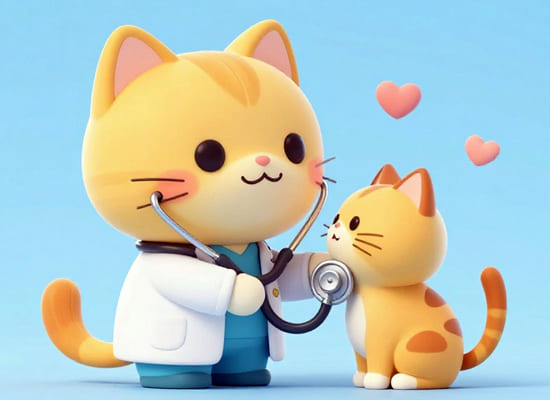
Your Cat Seems Healthy… But What About Their Heart?
BIO:
Dr. Ashlie Saffire is the founder and lead feline veterinarian at the Cat Specialty Center at Faithful Friends, where her passion for feline medicine drives everything she does. She graduated from The Ohio State University College of Veterinary Medicine in 2011 and became board certified as a feline specialist through the American Board of Veterinary Practitioners (ABVP) in 2018. She also holds both Fear Free® and Cat Friendly certifications, reflecting her commitment to compassionate, low-free care tailored to the unique needs of cats.
Dedicated to advancing feline medicine, Dr. Saffire actively participates in clinical trials and research studies. Her areas of expertise include minimally invasive diagnostics such as abdominal ultrasound, endoscopy, and rhinoscopy. She is also highly skilled in advanced feline-specific surgeries, including perineal urethrostomy (PU) for urinary obstructions, ventral bulla osteotomies for middle ear polyps, subtotal colectomies for megacolon, feeding tube placements, oncologic surgeries, advanced feline dentistry, and more.
Dr. Saffire is also involved in the broader veterinary community, currently serving as President of the Feline Veterinary Medical Association (FVMA). She is also an active member of the AVMA and OVMA and a USDA/APHIS Accredited Veterinarian, she can issue health certificates for cats traveling both interstate and internationally.
Education is a big part of her life, too. Dr. Saffire serves as a tutor for veterinary professionals through the University of Sydney’s Feline Medicine Distance Education Course, presents regularly at conferences and webinars, and mentors up-and-coming veterinary students in her clinic.
Outside of work, Dr. Saffire and Dr. Henricks, and their children, Madeline and Mason, live in Dublin. In her free time, Dr. Saffire can often be found at the barn riding Mac, their adopted retired racehorse.
Transcript:
Welcome, feline friends, to Cattitude. I'm your show host, Michelle Fern. Today, we have an exciting show.
We're going to talk about something that we don't want to think about, but it's very important, feline heart health. And I have a very special guest with me, so stay tuned. We'll be right back.
Welcome back, everyone. I'd like to welcome Dr. Ashlie Saffire. She's a DVM and a feline specialist.
Welcome, Dr. Ashlie. Hi. Thanks for having me, Michelle.
So I'm so excited to have you on because the more we can educate our listening audience, the better. And, you know, we've done a lot of talking in the past about, you know, feline health and care, not too much about heart disease. But before we talk about that, why do you think it's a challenge for us, you know, cat parents to get our cats to the vet? And why do we sometimes avoid those annual exams? What a good question.
It is very true. It can be hard to bring your cat to the vet for a lot of reasons. We know that it is stressful just catching the cat and taking them out of their natural environment where they feel safe and then putting them into a carrier, which usually most cats don't have access to a carrier until it's time to go to the vet every year.
So they know that's not a fun trip ahead of them. Sometimes the car ride can be bumpy or scary, and then they come to the vet clinic. And you can see how these things, we call them stress stackers, can just make the whole experience really challenging.
But it's so important that cats go to the veterinary clinic. And some of the ways that we can get around those problems is seeking out cat-friendly practices. There's a lot of clinics that go through extra steps to help you get your cat to the vet in a much calmer way and a less stressful way.
There are also lots of resources online that can help you with carrier training. But the big reason that they need to come in is a lot of us presume cats to be healthy because they're very good at masking illness. They walk around and engage in normal activities, even though they can have stuff brewing.
And so it's really important that we get these guys in every year to trend their weight, trend their body condition, even run some lab work occasionally. Because a lot of times by the time the pet parent realizes that there's something wrong with their cat, it's often quite advanced. And then we're trying to reverse something that may be a little bit harder to reverse.
Right. It's not impossible. And it probably will cost more and be more traumatic for your cat.
So great tips. One of the medical issues that can be easily missed are heart conditions. What should us cat parents be thinking about regarding heart disease when our cat may seem perfectly healthy? Yeah, heart disease is a tough one because it can be very challenging to see obvious clinical signs until the cat is really, really sick.
Again, like I mentioned, cats are super good at hiding signs of illness. And so a lot of times they'll continue to eat and play and interact normally. And so we can't rely on what we see going on at home to feel a safe sense of security that your cat is fine.
Really, the best way to screen a cat for any underlying heart disease is to have a veterinarian listen to them. We listen for heart murmurs. Sometimes we perform screening tests like blood pressure checks or even some blood work that can screen for underlying heart disease.
So I think the big message here is that even if you have a healthy looking cat, it doesn't necessarily mean that their heart is healthy. And it's really important to find a disease, especially like heart disease early, because there are a lot of things that we can do to intervene and treat and even slow down the of some diseases, including heart disease. Okay, thanks.
So, you know, like you said, cats are stoic creatures. They hide their illnesses and sometimes their emotions. But what are some of the subtle signs or are there subtle signs of heart disease that pet parents might be able to pick up on where we can distinguish? Is it something going on with my cat or is it just my cat's getting older? So my cat's more sluggish and, you know, that's to be expected.
Yeah, you know, sometimes can be subtle. Some can be a little bit more obvious, especially if disease is more progressed. You might notice that your cat isn't as active anymore.
Maybe they don't play as much with their favorite toys or they don't jump up on the couch or up on the top level of the cat tree the way that they used to. You can also sometimes see changes with breathing. One of the best times to assess your cat's respiratory rate is when they're sleeping and they're quiet because they're not disturbed by any sounds or smells.
So you can get a real true feeling for how well they're able to breathe. Sometimes we can also see even episodes of weakness or they could even collapse. So those are definitely more concerning signs for sure.
Okay, let's talk about HCM. Let's see if I can pronounce this correctly. Hypertrophic cardiomyopathy.
Yep. Hypertrophic cardiomyopathy. It's a mouthful.
It's also known as HCM, but this is important. Are there any breeds that us pet parents should be focused on? Because you hear more about this with dogs, that dogs with short snouts like pugs and bulldogs can have respiratory issues. You don't hear a lot about that with cats.
Yeah, you don't. There are definitely certain breeds that are predisposed and specific ones that come to mind that are probably most popular would be our Scottish Folds, our Ragdolls, Maine Coons, British Shorthairs, Persians, Bengal cats, Sphinx cats, Norwegian Forest, and then Burman. Those are actually, they have some genetic links, but we actually can see it in domestic shorthair cats as well.
In fact, it's probably HCM itself is the most prevalent heart disease that we see in cats. And it's estimated that one in seven cats will have evidence of even early stages of HCM. And about 23% of those cats that do have HCM will progress to a cardiovascular event that could cause mortality or death within five years of diagnosis.
So it is way more frequent of a disease than a lot of people realize. And a lot of these cats that actually have HCM, they can stay what we call subclinical, meaning they don't have obvious clinical signs for several years. But then some of them can go on to show signs of congestive heart failure.
Okay. So what exactly should we expect when we bring our cat to the veterinarian? What should we expect them to look at when they're checking the cat's heart? And what should we expect to hear about? I mean, it's more than just a stethoscope hearing the heartbeat, right? Right. Yeah.
To really understand if a cat has heart disease, absolutely using a stethoscope is step one. I mean, if we hear a heart murmur, we absolutely need to investigate that. Now, there are a lot of other conditions that can lead to heart murmurs.
So that's sort of step one. And we need to rule out all of these underlying diseases that can cause heart murmurs, including hypertension or high blood pressure, hyperthyroidism, which is a similar disease that happens in people. We can see dehydration or anemia causes that as well.
So we want to make sure there's not other reasons a cat could have a heart murmur, which those diseases are also equally important to treat. But then if we really think this could be true heart disease, we can run some screening blood tests that can help detect whether or not there may be some elevated enzymes in the bloodstream that could indicate heart disease. But the definitive diagnosis would be doing an ultrasound.
It's called an echocardiogram. So same thing that they do in humans where they put an ultrasound probe and they actually can look at the heart, assess how well it's beating, does it have abnormalities with it and come to the diagnosis of hypertrophic cardiomyopathy. You know, in listening to you, I love how what we're talking about regarding our cats, because I'm listening to all this and I'm thinking, yeah, that's what you'd expect, you know, with a human.
I mean, you know, the different discussions of is it a heart murmur or how can we check? Is it blood pressure? Is it this? These are things that we wouldn't even bring up maybe a decade ago. It's so true. I think even really the last couple of years, the ability to do better diagnostics for cats has just grown tremendously.
And I think that's something that maybe historically people didn't bother bringing their cats in or doing much because what were we going to do about it? Right. Like there's what are you going to do if you hear a heart murmur? We can't really do much to rule things out. And we now have such more specific heart tests on blood work.
We have echoes. Even a chest x-ray could be helpful to assess and look for other potential reasons that a cat might be having respiratory signs. And now we have medications and therapeutics available that, again, we didn't have even three years ago, that for this disease in particular, we can actually put them on that is a medication to help treat these subclinical HCM cases, which, I mean, ultimately could mean we have our cats with longer or better quality of life for longer.
And isn't that what we all want is our family members to spend as much time as possible, right, with us? Of course. You mentioned the word echocardiogram. So, I mean, if I heard that when I brought my cat in, I would I know what it is.
I have an idea what it is, but it would make me very, very nervous. So what is and it's just just by the name sounds intimidating. What should pet parents know about an echocardiogram? Yep.
So echocardiograms are really nice, noninvasive. So it means it's very easy on the patient way to look at the heart and assess its function. It is often done by cardiologists.
However, there are some other veterinarians that are trained and able to perform echocardiograms as well, which can be really helpful, especially if you live in an area that doesn't have a cardiologist handy. But it's a great way for us to measure the size of the atrium or the ventricles, which are parts of the heart. They can assess how well the heart is pumping.
And it's the exact same thing that happens in people when you have underlying heart disease. I'm sure a lot of people have met someone who has a heart disease or heart condition, and that's really the standard of care in human medicine of how we assess the heart and how well it's pumping. So it's great that we have these similar tests available to us for our feline patients as well.
Okay. Thank you for explaining the echocardiogram. We're going to take a short break, and then we'll be right back.
Welcome back, everyone. We're talking to Dr. Ashlie Saffire, and we're talking about heart disease in your cats. So welcome back to the second half.
So, Dr. Ashlie, we talked about routine, you know, wellness care, but is heart disease often caught just in routine checkups? Or is it something that you'd really have to tell your veterinarian, I'm not sure about this, but please check it because it's not part of the general, you know, routine checkup? Yeah, that's a good question. You know, I have had some patients that unfortunately have maybe new to me, haven't been to a veterinarian in several years, and they present their patient or their cat, and it is in clinical congestive heart failure. And that's a really hard place to be in, right? So we already are at the point where that heart disease has progressed enough to have led to heart failure, and the prognosis at that point isn't great for the cat as far as, you know, what our options are to treat them.
And so when we have those gaps in care, that's when this disease will sneak up on us. And so when we can get these cats into the clinic, get those annual exams, we're looking at so much. We're watching how the cat is breathing.
We're listening to all the valves of the heart. We're trying to catch very subtle changes. It's also really important cats over seven should get their blood pressure checked every year.
That's really a standard that we're seeing more and more in many vet clinics, but it helps also to detect small potential changes going on in the heart. Lab work is really important as well. We can check trends and look for any sign that there might be something going on or changing in the patient that would indicate additional testing or imaging.
So we have a lot of tools available to us to screen cats for heart disease. And so I think the biggest barrier though, is that the cats don't come into the clinic. So if we can get them in, we can get these exams done.
We have such a better chance, especially when you look at these statistics, one in seven cats have heart disease, right? That's a lot. And for me, as a feline practitioner, that's all I see all day. And we see probably, I don't know, probably somewhere between 20 to 30 cats a day, right? That I'm seeing several cats with heart disease that could be subclinical.
And now maybe there's not signs yet, but that's why we want to see these guys every year and do different screening tests to make sure that we're catching them as early as we can. Okay. And you brought up something that made me think of something else that is very much quite related.
What would you say to our cat parents that say, you know, it's not the cost. It's not the cat. It's just, I can't always find the veterinarian that I'm comfortable with or that my cat is comfortable with.
What would you tell them? Because you're, you know, you're the veterinarian. I've had this situation, but this was with a dog where I actually never went back. I had, she was in the middle of an annual test and, you know, annual exam and I didn't like the treatment and I thought I'm never going back.
This veterinarian actually complained about hair on her. She blew my mind. So what do you say to some of those? Because a lot of pet parents are maybe, I don't think I was being mean about it.
I wasn't mean, but I think as a pet parent, I have a right to speak my mind or maybe just make the decision. I was already had, he already had the shot, so I couldn't just leave or, you know, but so, but I never went back. But what do you tell the pet parent that might be intimidated about making sure it's the veterinarian for them? Yeah, I think it's really important.
I mean, you are not alone in your experience that can happen right anywhere, even in the human world. It's super important that you trust your veterinarian, that you feel comfortable, that you can ask questions when you need to, and that your pet is comfortable. And I can tell you right now, there's no way anybody wants me doing a physical exam on their dog because I am not, I would not be very good at it.
But let me tell you with cats, even the most fearful cat, those are my favorite patients. Those are the ones that I want to see. I want to give them as best of an experience as possible.
And I think that there are people like that out there. There are a lot of veterinarians that want to do great with cats and that love cats. I think a really good resource is going to catfriendly.com. It is a website put together by the Feline Veterinary Medical Association, and it has got a ton of resources for caregivers on how to find a practice, cat-friendly practice.
You can actually, there's a link where you can put your zip code in and it will find you a cat-friendly certified practice, which is awesome. So you can actually find either veterinarians who have taken additional cat-friendly courses or a practice that's considered cat-friendly. And these are dog and cat practices.
They're not just feline only, but it can help you maybe find some more options that you might feel more comfortable with. Talk to your veterinarian also about what can you do to make the trip less stressful in general. There's a lot of pre-visiting anti-anxiety medications that can be given that can really help that pet relax and have a better experience.
But I mean, like you said, if you don't have a good relationship, it doesn't mean that all of the veterinarians are going to treat you the same way. And I think it's super important to find somebody that you feel comfortable with. And there's definitely no shame in looking and experiencing other clinics if where you're at's not a good fit.
Right. And sometimes you like your veterinarian, but maybe you had, like the veterinarian I went was for dogs and cats, for my dogs and cats, but there were changes, you know, in the system. The veterinarian was still there, not all the time, and there were just changes.
So I found a place that is, you know, feline focused and it's just better. It is different. There's a difference.
And it just, it made a big difference to my cat. It made a big difference to myself, not ruling out veterinarians that cover all animals, especially, you know, dogs and cats, but sometimes you have to do what's right for you. Absolutely.
And you might have a separate vet for your dog and a separate vet for your cat. That's okay too, you know? Yes, absolutely. And we also know too, I mean, when cats are stressed and the caregivers are stressed and the cats are stressed, it affects even lab parameters and physical exam findings.
We can see murmurs develop in a cat that's very stressed just because of a stress response. And so that doesn't even mean the cat has underlying health, you know, health condition or heart disease, but it was stressed. So those are definitely things that we want to think about.
We want to make that experience as calm as possible. I mean, it's super important. And the good news is there are plenty of clinics all over the United States that have cat friendly certificates and cat friendly practice designations.
So there's, you can certainly find one. Okay, thanks. That's great information.
And I know it helps all of the cat lovers that are listening. Let's talk about emergencies. What symptoms should make a cat parent stop and seek immediate veterinary attention other than, you know, the obvious? Yeah.
I mean, when it comes to heart disease, at least for an emergency, anytime you see your cat having signs of breathing changes, where they are open mouth breathing cats should never pants or open mouth breathe. So if you see a cat with an increased respiratory rate that has evidence of active, you know, looking like the cat is stressed and trying to breathe, or if their gums have a bluish tint called cyanosis, we definitely want to get that cat seen right away. Other signs of heart disease or a heart emergency, something that often doesn't go doesn't isn't very obvious is or obvious that it would be heart disease is they can actually have a clot, a blood clot form in their heart.
And it's a process that happens over time. And what can happen is that blood clot can get dislodged from the heart, and it can actually get stuck down at the aorta where it splits and goes down the two legs. And so we can have cats that will get a blood clot and they can't walk.
And so they might be dragging their back legs or crying out in pain. And that actually is a major sign of a problem. So anytime your cat is having trouble walking, seems like it's in pain or dragging its hind legs, that would be a big concern.
For sure. Another thing that I noticed, and I see a lot of times to happen is appetite changes. Sometimes when cats are starting to accumulate fluid in their lungs, they may not show obvious signs of breathing changes right away, but they stop eating.
And one of those reasons is because they're focusing so much on breathing and trying to hide that they can't breathe, that they stop eating. And so I've seen a lot of cats come in for decreased appetite and ended up having heart failure. So it's always important to, anytime a normal routine is off or different in your cat, be very suspicious that something is happening and that they may need to have an examination, especially if it has been a while.
Wow. Those are great signs and great tips. Thank you.
So for a cat that's diagnosed with HCM, what does management look like? Yeah. And we talked about this before, but how has the treatment landscape changed in recent years? Yes. So years ago, we couldn't do much.
We would say, all right, your cat has heart disease. We are going to watch them for progression. And then here's the signs of heart failure.
And we maybe we'll start treatment. Some cats, they get diagnosed a little further along already, and they might get started on things like a medication to help them pump their heart better. Or they might be put on a medicine called Plavix, which helps prevent clots.
Like I had just talked about, those clots are a big complication of heart disease. Sometimes they're on a diuretic, which helps to remove fluid, especially when they get that fluid buildup. But there was this group of cats where we knew they had disease, but not enough to be put on a medication yet.
What did we do with them? And that's where this new medication I've sort of alluded to, it is called Felicin CA1. And it is a new therapy for our subclinical or early stages of heart disease. And it's a great option for those cats to actually do something proactive in hopes of preventing progression or slowing progression of the heart disease.
And I love it because it's just a once a week tablet. So it's very, very cat friendly, very easy to give. And so this has been a great option for that situation where we diagnose the heart disease, but what do we do about it? Now we can actually do something proactive.
So it's, again, just more reason to get these cats into the clinic, get these diseases or this heart disease detected sooner. And does that medication, is the change, can it be significant? Can it significantly slow down the disease? So there are a lot of clinical trials that have looked at its effectiveness. It currently has what's called conditional approval.
So that's why the name of the medication is Felicin CA1. So it's been conditionally approved. The final clinical trial to show its full effectiveness is still ongoing, but is wrapping up.
So hopefully we'll have that data here in the next couple of months. But there have been several safety studies and other studies done to show that it looks to be a very promising treatment for feline heart disease. Okay, let's talk about what us cat parents could do at home.
You said mentioned, pay attention to breathing rate, watch their gums in they might look blue, watch the appetite level, activity level. What else should we watch out for? So before we go to the veterinarian, be aware of these things so that we can have that, a more, I guess, educated discussion with the veterinarian. Because they need to know more than a lot, right? They need to know more than, here's my cat, here you are.
They want to know other things, which is generally from a pet parent's point of view, eating, pooping, moving. But what else? Because you're the expert, not me. No, very true, right? Elimination habits are huge.
That's something that I always want to know about. How often are they urinating? Have there been any increases or decreases? Same thing with defecation habits. You know, we think that, you know, cleaning the box every day is annoying.
It can be tough, right? We have a lot of these automatic robots and things nowadays. But it's really important that if you're using, especially some of those automatic devices, that there's some kind of tracking system, because it's really nice to be able to look back and see if there have been changes in trends of elimination. That's a huge indicator of health right there.
Of course, how much food they're actually eating. Are they eating normal amounts? Weight is another big one. So if weight changes, both getting bigger or getting smaller, but particularly weight loss is always a concern that there may be some kind of chronic disease going on.
I always like to use the example of muscle as well to look at. And I always teach my pet parents to pay attention to muscling. And I use my hand as an example.
Like if you make a fist and you feel that meaty part on the side of your hand, that's what a nice muscle should be like. When you run your fingers down the back, the top of your hand, where all your tendons are, if that spine starts to feel like that, where you can feel little bumps, that could be a sign of some muscle loss. But then if you run your hands over your knuckles, where they're real big ridges, that's a pretty big concern.
If I feel a spine and I feel those big ridges like my knuckles, I'm worried that there's some kind of muscle loss or some weight loss going on that could be a huge indicator that there's something going on. But other things at home, like we talked about the activity levels, you know, a lot of people think my cat has been sleeping more and that's normal with aging, but it's actually really not. I mean, cats usually when they sleep more, sometimes that means that they're painful and they just don't want to do a lot of activity.
So sometimes the sleeping more thing, it's not just them getting old, it's actually a potential underlying pain or musculoskeletal disorder. We can even see some neurologic changes, like our older senior cats can get senile and have cognitive dysfunction too. So there's a lot of questions we ask when they come in, like how have they been sleeping? Do they sleep during the night or do they vocalize at, you know, at different times of the house or seem confused? So there's a lot of other questions that we ask about behaviors, elimination habits, diet, all sorts of things like that.
Also, how well are they grooming? When you see a cat that's starting to get more matted fur that used to be a fastidious groomer and would never have a messy coat and now all of a sudden is getting more and more mats, that tells me something's wrong. That cat's not feeling well enough to groom like they should. And so is that an oral or dental disease? Is that pain, arthritis? Is that heart disease and they don't have the energy? So there's a lot of factors that we're looking at when we see these changes.
Okay. Wow. I love that tip, especially the hand tip.
Wonderful. Great. I think it's going to be helpful for a lot of our pet parents that are listening.
If you could change one misconception that cat parents have about feline heart disease, what would that be? I would say that it's going to be obvious that their cat has heart disease, that they're going to think they will see signs at home. And that one is the one that hurts the most because it's probably the most tragic when we have a cat that comes in in congestive heart failure that hadn't had any clinical signs prior and maybe because they hadn't had any physical exams in the last couple of years. So those are the tough ones because cats are so good at hiding pain and so good at hiding illness, even from their family members.
And that's because of their nature. They are not just a predator species, but they're also a prey species. And so it is everything in them to hide and push away any type of illness or any kind of disability or pain.
And they will do it until it is basically to the point where it's unbearable. And that often, unfortunately, is the time that the pet parent or family realizes, oh, you know what, there's something wrong. I don't remember them doing that before, or that doesn't seem right, or they're not eating.
So we just really need to remember that cats are not going to show you that they're sick. So they absolutely need to have better health screening and exams really every year. Thank you.
This question is pretty much related. But just in case you have something else to add, what would you tell someone listening that has a cat that maybe hasn't had a wellness exam in a while and thinks, well, my cat seems fine. And again, we talked about so many times that they're stoic creatures and they hide things, but my cat seems fine.
I don't know if I really need to take my cat in for an exam. Yeah. Yep.
And I totally understand that. We also live very busy lives, and cats historically are considered the easy pet, but they're not. And they need care.
And I think if you know that there are so many more things that we can do now to help slow progression of disease and preventative medicine is so much better for cats now than it was even five years ago, that it's so much more of a reason to bring them in. And I think one of the main factors we know is stress, why caregivers don't bring their cats in too. That's another big factor.
There are lots of, we talked about this earlier, there's a lot of resources online on catfriendly.com on things you can do for carrier training. Look for a veterinarian that has a special interest in cats and has gone above and beyond and gotten their cat friendly certificate, or it's a cat friendly practice. It'll help you out.
It'll help your cat out. And really everyone's goal is we want cats to live as long as possible. And with better medicine and all of these things that we have now, they can, but we can't help them if they don't come into the vet and these diseases don't get diagnosed.
Absolutely. I want to thank you so much for coming on Cattitude. Do you have a site online where people can find you and do you want to disclose where you practice? Sure.
Yeah. I practice at a dog and cat practice. It's called Faithful Friends Veterinary Clinic in Dublin, Ohio, which is a suburb outside of Columbus.
So happy to chat with anybody, you know, anytime, if you've got questions or help you find a cat friendly practice, if you live in a different city, but our website is faithfulfriendsvetclinic.com. And then my cat side of it, I have my own cat section in there. It's backslash cats. So you can learn more about us and we have some resources and blogs as well on our website too.
I know. And thank you so much for coming on Cattitude. This has been such a wonderfully informative show.
So thank you so much.
Yeah, thanks for having me. This was great fun.
I hope you all enjoyed this show. It's, you know, it's a hard discussion talking about feline heart disease, but it's very important. I wanna thank my guest, Dr. Ashlie Saffire. Be sure to check out the website catfriendly.com for feline-friendly veterinarians. I wanna thank my cats, Dennis, Charlotte, and Molly. For, you know, being the wonderful little kitties they are. So thank you, crew. Thanks to everyone listening to Cattitude. I appreciate your loyalty. Thank you so much. And of course, the show would not be the same without the magic of my producer. Thank you so much, Mark Winter, for all you do. And hey, remember, lose the attitude, have Cattitude.