

Through a Cat's Eyes: Discovering The Wild Side of the Wall
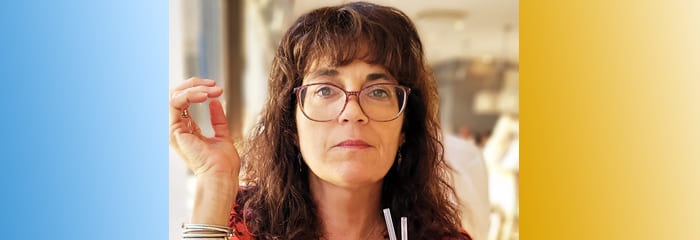


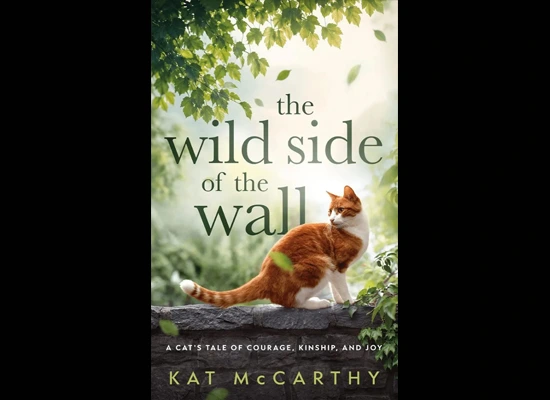
Ever wonder what the world looks, smells, and feels like through your cat's eyes? This week on Cattitude, host Michelle Fern welcomes author Kat McCarthy to discuss her captivating novel, The Wild Side of the Wall: A Cat's Tale of Courage, Kinship and Joy. Meet Cricket, a courageous young outdoor cat navigating a world filled with danger, discovery, and unexpected friendships, including a remarkable bond with a dog named Gentle! Kat reveals how she researched authentic feline behavior to bring Cricket's adventures to life, capturing everything from a cat's powerful senses and hunting instincts to the importance of companionship, play, and living in the moment. Michelle and Kat also explore why cats aren't necessarily the solitary creatures we think they are, what slow blinking really means, and simple ways to enrich your indoor cat's life beyond buying another toy. Plus, a thought-provoking conversation about animal welfare and the practice of cropping dogs' ears and docking their tails. It's a fascinating journey into the feline mind that just might change the way you look at your own cat!
Listen to Episode #319 Now:
What If You Could See the World Through Your Cat's Eyes?
BIO:
One of Kat McCarthy's earliest memories is reading Dr. Seuss to her cat Dusty, her dog Sam, and her teddy bear Mama.
Ever since that tea party, her life has been filled with animals and stories. Fascinated by how animals experience the world, she has spent her life trying to understand what they notice, how they communicate, and the stories they live.
When she couldn't find a novel that let her experience the world the way a cat does, she wrote The Wild Side of the Wall. She continues exploring feline behavior at TheCatsTale.com.
Transcript:
Hello, feline friends, welcome to Cattitude. I'm your show host, Michelle Fern. So today I have with me an amazing author and she wrote the coolest book.
And you know me, if you've been listening to Cattitude, I am a voracious reader. I love to read. I've been reading since I think I was four or maybe even three, but I'm a reader.
And so I love when we have authors on the show that is on my bucket list. Anyways, stay tuned. We're gonna be right back.
Welcome back, everyone. I'd like to welcome Kat McCarthy. What a great name, Cat for Cattitude.
She is the author of The Wild Side of the Wall. Welcome, Kat. Thank you so much for having me, Michelle.
It's a pleasure to be here. Oh, thank you for coming on. So the full title is The Wild Side of the Wall, A Cat's Tale of Courage, Kinship and Joy by Kat with a K McCarthy.
That is it. Absolutely. Let's talk about your book, which I read.
So let's start with Cricket. So the book is about 300 pages, but it's a quick read. And what it's about is experiencing the world as a cat, rather than reading a story about one.
Exactly. You were talking about when you were reading as a young girl, I'll bet like me, you spent loads of time wondering what life would be like as a kitty cat. Sure.
And dog. Yes. Absolutely.
And I always wanted to find a book that would let me do that, would let me experience life. What is it like to be a cat stalking under the undergrowth or even basking and purring in the sunshine? I never found the book, so I decided to write it. So I'm going to confess, because I read so much, I kind of consider myself a book snob.
I can decide that if I want. So there. So when reading books about cats, and I've had quite a few authors on the show, when books are from a cat's perspective, I sometimes and I've always been honest with my listeners.
So sometimes I'm like, oh, but I thought to myself, I when I started the book, I thought, oh, is this cat going to start talking and everything? Because there are some books that I've read like that, that I really liked. But some of them I had a, you know, struggled. This book, however, was not really about a cat talking like, you know, you know, the cats talking to humans or, you know, imaginal talking.
But it's really from the perspective of if you're a cat, like I haven't eaten red meat in years. And some of this stuff, because, you know, cats are carnivores. I just say, oh, I don't want to read that part.
But that's part of being a cat. So what made you want to tell the story so much from Cricket, who is the protagonist in the story, her perspective, she's a young female, about six months old, and she's living outdoors, no humans, no family anymore. Her mother and her litter mates are gone, because life is dangerous for a cat on her own.
And that's the cat that we're, we're following. I wanted to write from her experience, from her perspective. For the reason I told you, I wanted the reader to have a chance to feel what it feels like to be the cat, all of it, all the good, all the joy, all the fear.
Yes, she has to survive. She has to hunt. But she plays and she plays with raindrops.
And she plays in the sunshine and she rolls in a purse. And she makes a friend. And that friend becomes her family.
That was what I always wanted to read. So when I was reading, I thought I was trying to think from your perspective. And I thought, I wonder how she did this.
And you did capture one of the underlying themes that is addressed, you know, a couple times is cats are both predators and prey. Yes. And even though they've been kind of domesticated, they share a lot of their genetics with, I think it's 95% to either tigers or lions.
Tigers, absolutely. Right. So they're like little tigers in our house.
They're not the same as dogs. They're not little dogs. We always say around Cattitude, cats are not small dogs.
So how did you find yourself thinking differently so that you were able to be accurate as possible in your writing? I started doing a ton of research. We all know cats purr. We all know that cats sleep a lot and they bathe a lot.
But I really wanted to get in deep to why they do these behaviors, what they mean, what they do for the cat. Turns out that they purr for so many reasons. And they bathe for so many more reasons.
I wanted to have all of that behavior accurate and natural to be able to use that. But then I also, I wanted to sink into the mindset of a cat. Cats are enormously alive in the present.
We talk about mindfulness and being in the moment. That is a cat. A cat inhabits the moment in a way that we humans can only aspire to.
I found myself sinking into her mindset, being entirely enraptured in this one scent that she found or in a feather tossed by the breeze and how that became her entire focus. And that helped me really get into experiencing life as a cat. I think the other thing is that in addition to being very, very sensory rich, cats are sent first and then hearing.
And only then do they pay attention to sight, whereas humans are very sight-oriented. So rather than always looking at what things looked like, we talked about what crickets smelled and what that made her feel and what she heard and the vibrations through the ground, so that we really experienced as closely as I could this life from the cat's perspective. It was so much fun.
So this cat is an outdoor cat, which seems like the only thing that could be appropriate for the book. Did you even consider indoor cat at all? Because, I mean, it looks like it takes place, it's on either a rural area or farm, or that's what I was kind of picturing. Sort of snorkeling, right? Right on the outskirts.
Outskirts, yeah. Of people's regular lives. Close enough, she actually, her territory is made up of, at the beginning, eight neighborhood backyards and the land right around behind that.
Those are the walls that she lives on the other side of. She's on the wild side of the wall, not the tame side where humans and their dogs and pets are, but on the wild side where the raccoons and the possums and the snakes and the lizards are all doing life. So, Cat, you've had some unexpected reactions from readers who said the book has changed the way they look at their cats.
What are some of the things the readers have shared with you? It's been so gratifying to see that already readers are noticing the importance of enrichment for their cat based on reading the book. They have a better idea that it's not just this thing you're supposed to do to take care of your cat, but that it is, from the cat's perspective, such a huge part of their joy in life is the ability to smell and touch and feel and play with and interact with a variety of things in their environment. So that's been enormously gratifying.
The other thing that's been really interesting, I found myself almost finding a sort of contemplative or meditative state when I would write. I would feel daily stress and noise would just fall away as I would do my best to get inside this little cat's mind and heart and focus on the scent right in front of her nose, on the swaying of the leaves overhead, the way the light would dapple through the leaves. I found myself becoming enormously calm and yet wondrously alive and aware while I was writing.
It was such a marvelous experience. So many readers said the same thing. I just heard from someone who had to reschedule our podcast interview because she says, I don't want to read your book the way I normally do, as if it's a work assignment.
I want to savor it. I want to read it slowly and really savor the experience. That I keep hearing from readers and it's wonderfully exciting.
I have to tell you, it was a nice escape because my life is often erratic and it was a nice escape, really was. Let's talk about cat enrichment. A lot of us live in cities or urban areas and most of us have indoor cats.
I live in greater Fort Lauderdale where your cats need to be indoors. It's just too freaking hot. It's too hot for two-legged people.
So for four-legged, forget about it. A lot of people live in cities and I think there's a challenge for us with indoor cats, but it's a necessity for a lot of us from depending on where we live because for the safety of our cats and the well-being of our cats. So how can we bring in enrichment? Because a lot of us think about with cats, oh, I'll get another toy or something else, but cats see things different, which is why a box can be the greatest thing or a bag on the floor that makes crinkly sounds.
Absolutely, and the chance to really experience it with their whole body and that interaction is what is so much fun. We often think, oh, I'm supposed to do cat enrichment. Let's find something they sell in the toy aisle under cats.
That's not what the cat is looking for. They want interaction with you. You could bring in some pet-safe foliage from the yard or even the garden center and share that with your cat and that would be a wonderful experience for them to smell and feel and taste and rub against.
But too often, I think, we hear that a bunch of your readers right now are thinking, bring in foliage? Oh, I don't think so. That would make a mess, right? I'd have to clean. There might be a little bit of soil.
No, not in my home. I hope that when they read the book and they see how much that stimulation physically and mentally and the smell of it and the sound of it means to the cat, perhaps they'll reorient their priorities just a little bit and think, you know, an extra vacuum is worth it to give my cat that experience. Of course.
I have a catio. It's supposed to be a patio for humans and cats. It's mostly for cats because it just is.
Three litter boxes just on one catio. Well, three cats, but still. But yes, I definitely think that makes a lot of sense.
I think my most playful cat is Molly and her favorite thing is it's a stick with a string. That's what she loves. Right.
All things. We have to take a quick break. We'll be right back.
Welcome back, everyone. We're talking to Cat McCarthy. She is the author of The Wild Side of the Wall.
So we're talking about different things about your book. Let's get to this part. So friendship is a big part of the cricket story.
Why does friendship matter so much? And it's interesting who she becomes friends with also. Well, as I said, Cricket's about six months old. So she's been on her own for a while, long enough to really master survival.
She lives in a very sort of safe area in a suburban area in people's backyards. But still, she gets hunted and she hunts. She's learned how to do all of that.
And now that big predator brain of hers is looking for more stimulation. Life needs to be more to keep her interested and fully engaged. She decides the kind of closeness she once had with her litter mates.
That's what she's looking for. She's looking for a friend. And she finds a large, joyful dog who is full of puppies.
And that's who she winds up bonding with. So Gentle, the large dog, and Cricket become enormously fast friends. And eventually, Cricket winds up helping to raise Gentle's puppies.
So do you think it's really beneficial to have more than one cat? I mean, I have three. I've had as many as five. And I've had three cats and two dogs indoors.
Then the other two cats were more community. And that's what they preferred. But they had a little house for the elements and so forth.
But I think, I mean, dogs are in doggie heaven now. But I think my cats, they enjoyed everything except sisters from different litters and different misters. And they don't get along.
Everybody else always did. I think having another animal in the household is vital for a cat. I think it's marvelous for the cat and for the dogs.
That other animal is an entire world of sounds and smells and reactions and interactions. And that's stimulation. That is enrichment.
Your other cats are all providing enrichment for one another in a way that, I'm sorry, no cat toy is ever going to do. And sadly, too few humans who are often away from home for eight plus hours a day, and they get home and they're too tired to play and too tired to interact with the cat. And now the cat comes close and wants to sniff something and you push the cat's face away.
Seriously? That doesn't give them the kind of interaction that they really crave. But another animal, ideally one they like. But honestly, I think even one that they don't get along great with, as long as there's no fear or aggression between them, I think that's marvelous enrichment.
Okay. So you chose for Cricket's relationship to be with a dog. Why did you choose a dog versus another cat? I thought a dog would be less expected.
I thought it would also give me a great opportunity to show the communication styles of each species and how they work together. They do not speak the same language, but they understand each other, which makes sense when you think about it, doesn't it? Because even on the African veld, the prey animals always know when hunters are hunting and when they're relaxing. I think animals understand one another far better than we understand them.
They understand us and each other better than we think they do and better than we understand them. I think you're right. And there's even a section of the book that I remember where Cricket is in a fight with another cat and there's kind of a communication.
I think it's with the other cat. I might be mixing up something, but she blinks slowly to let the cat know. Was it with the cat or something else? Possum.
Was it with the possum? No, actually that's happened several times with a female cat she doesn't want to fight with, with a tom that is about to attack her that she's trying to avoid the fight with, and with a skunk. So the skunk that, I mean no harm. That's what that starts with.
I'm not here to fight with you. I mean no harm. And that slow blink is where you start with and various body postures to show that I don't, I'm not a threat to you.
I'm not a problem. And that helps her stay out of fights with all but one bad cat that is intent on attacking her. Yes, which it happens.
So you had to have that. Now I've heard that a slow blink from humans to cats means like I love you in cat language. It does.
But it starts by saying I am no threat to you. That's the first thing that the slow blink says. I am not fixated on you as if I were hunting you or about to attack you.
My eyes are soft and I'm blinking slow. I have no aggression intended. And that's the first thing that that expresses.
So good to know. We talked about this just now, like Cricket experiences the world through instinct, curiosity, danger, and sometimes making split-second decisions. How important was it for you to let her behave like, you know, like a real cat versus give her too many human characteristics? That, from the beginning, I was absolutely dedicated.
This would not be a human in a furry little cat suit. This would be an absolutely natural, authentic cat. I've lived with and loved dearly nine different cats over my life.
And in some way, this is my love letter to them. And I wanted to show the glory of these little cats that we live with and love, the mystery of them, the wonder of them, not wouldn't it be cute if a cat did this or said that, that a human would actually do. Where's the fun in that, right? I wanted her to be a real cat, just like the dog and the puppies and the snake and the possum and the skunks are real and authentic to themselves.
That's what I wanted. You succeeded. After reading the book, what do you hope readers notice differently when they look at their own cats? And do you think this might encourage people that just maybe have read a book about a cat to maybe adopt a cat? I hope that people see the cat, see their life with the cat more from the cat's perspective and have a greater, deeper appreciation for the cat and the cat's needs for enrichment, that they will spend more time interacting with their cat, maybe get their cat a friend.
And I think maybe a lot of people who think that a cat is too standoffish and they don't get a pet for that reason, I think they would find a cat to be far more rewarding than they realize if they're just willing to pay attention and listen to things from the cat's perspective. So true. I'm a newer cat person.
I've had cats now for almost 20 years, but I was initially a dog person, so I felt I understood them more, but my cats definitely taught me about them. Dennis was my first and he's part Maine Coon, which I've learned that, sorry for the expression, but they're like the dog of cats, which was probably a good cat for me to start with because I thought, I've even told people, I said, well, my cat's so cool, yours is kind of biatchy, and then that, well, I'll just say it, bitchy. And then that same person said, no, no, cats are like this.
They're not bitchy, they're cats. Your cat is the weird one, which is true because then I got Molly and Charlotte and Molly, Charlotte's a little bit misunderstood. She's very unusual, but Molly really taught me about cats.
I learned that you have to respect what cats want to say when they want to say it. When they're pushing your hand, and she'll sometimes push me and not have her claws out, but sometimes they are. So I have to watch for signals.
This is her saying, I had enough petting or had enough. And sometimes it's with the claw, but that is not her being mean or vicious. That's just how she is wired.
That's her way of saying, later, leave me alone. I don't want to be bothered right now. Right.
But don't you think that that's what we need to do with one another? Just a little bit more listening, a little bit more respect, right? We want to understand what the other person is doing and saying and caring about too, right? So if we treat our pets, our dogs, and our cats as entire beings with their own needs, and with the need for respect, the way we respect or should respect one another, I think we wind up having vastly more satisfying relationships with them. And I think they become much closer with us. Absolutely.
So if Cricket were to give our cat parents listening one piece of advice to make cats' lives more interesting and fulfilling, what would she say? Don't assume that cats are solitary creatures. We always think that, and that's our misapprehension. Cats are solitary hunters, but they're not solitary creatures.
Left to their own devices, they very often choose to live in large colonies, cooperative colonies, or to go find a friend to bond with as Cricket did and as your own cats have. Were there any aspects to understanding the world from Cricket's perspective that surprised you? I would say how enormously alive to every tiny thing she is, and that helped me see beauty and wonder and something special in the smallest things. And that was, I would say, a privilege.
It was an amazing experience writing this book. I'm really looking forward to the next one because of those kinds of insights that somehow she shared with me. So, Cat, at the very end of the book, you mention that, you know, gentles puppies are being taken away to have their ears cropped and their tail docked.
I was trying to think what breed, what breed, and before I read your part at the end, I thought I bet this is a boxer. And at the end, you have a chapter and it talks about, Cricket mentioned this too, about not damaging what is not affecting their body, their stuff. Why do we dock tails? Because it's always been done, right? Why do we crop ears? Because it's always been done.
I mean, we're not talking about show dogs. That's another world and that's not where I live. That's not where I live.
People that I know that do that and that's all fine, but these are not show dogs. It's just been done because it's done. Not show dogs.
They're not working dogs that are pushed to the very limit of their degrees and their abilities. No, these are dogs that we do that because it's expected, because it's cosmetic surgery that has been done and has been always done. Gentle's man's parents raised boxers when he was a little boy.
He took the puppies to get their ears and tails chopped off and he never saw the awfulness of that. And so he just, he loved boxers. Gentle has her tail and ears gone.
He thought he'd do the same with the puppies, all but the one, right? We have a chance to save the littlest puppy's ears and tail. And that becomes a big adventure there at the very end. But yes, that was very important to me to show basically body autonomy.
Let the puppy keep his own ears and tail. Losing that, again, I wanted to show that from the puppy's perspective, losing your ears and your tail is an enormous loss, well beyond the tremendous pain of the moment and the days and days and sometimes weeks of recuperation. It is a lifelong loss to the puppies, to the grown dogs.
And I wanted to show that as well from the animal's perspective. I'm glad you did because hopefully it'll have a lot of the readers thinking of things that they did. And then just as a matter of fact that, oh, they're always done this way to maybe say, well, why? I don't need my dog's tail cropped because this happens much more frequently to dogs, not as much with felines, I think.
No, no, it's hardly at all. But there are 73 different breeds of dogs that routinely have their ears and tails chopped off before people ever get them. People don't even realize how many have this done.
Boxers, I think shepherds. Not shepherds. Nope.
Poodles. Poodles very often, but actually Cocker Spaniels, just a huge number. And it's so terribly unfortunate.
So Kat, you kind of said to us a few minutes ago about your follow-up book. What do you have? Do you have any ideas about what your follow-up book might be about? I do. Cricket is still living with Gentle and her one puppy.
You met him, Little Dare. He now goes by Dare. And Gentle's a man.
But she figures that she lives with Gentle and the puppy, and the man is just kind of there. She winds up mating and having kittens and raises them there in that home. Over time, she comes to accept the man.
That sounds like a wonderful book. Where can our listeners find your book? They can find the book on Amazon.com, but also on Barnes & Noble and Kobo and Google Play and who else? Apple Books. That's right.
They can also get the first two chapters free if they just go to my website, thekatstale.com. Subscribe and you get the first two chapters free. Kat, I want to thank you so much for coming on Cattitude. This has been just a wonderful experience.
Thank you so much, and thank you for writing a great book. Thank you so much. It's been a joy.
Listeners, I hope you enjoyed this show. Be sure to check out The Wild Side of the Wall by Kat McCarthy or go to akatstale.com. Thanks to my Kat crew that's taught me so much about cats. Thank you, Dennis, Charlotte, and Molly.
Thank you for everyone listening to Cattitude. I appreciate you so much. I've had quite a few listeners even come on the show.
It's been just a joy. Thank you. Thank you for your listenership.
So appreciated. Of course, the show would not be the same without the magic of my producer. Thank you, Mark Winner, for all you do.
Remember, lose the attitude. Have Cattitude.