

If I Fits, I Sits! A Life in Boxes with Milo the Cat
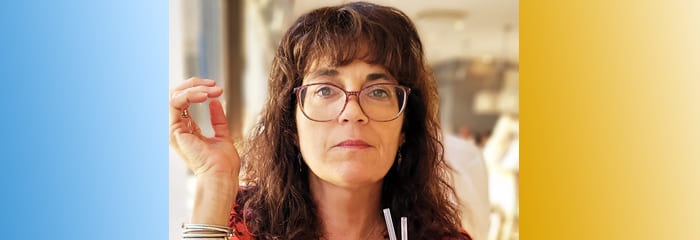


Why do cats love cardboard boxes more than the expensive toys we buy them? And what happens when a bossy, opinionated rescue cat decides to become an author? This week on Cattitude, host Michelle Fern welcomes Randy Parker, author of A Life in Boxes by Milo, a hilarious and heartwarming cat humor book told from the perspective of Milo, a notoriously chatty feline who always had something to complain about! Randy shares how Milo practically adopted his family at the San Francisco SPCA, how his obsession with boxes inspired a blog and eventually a book, and the amusing relationship between Milo and his feline housemate, Toby. Discover why cats can't resist squeezing themselves into the tiniest spaces, how Milo even claimed rectangles made from masking tape, and why the book's beautiful watercolor illustrations and snarky captions capture the true essence of feline behavior. Plus, Randy shares the touching story of Milo's battle with kidney disease and how his beloved cat's legacy lives on through laughter, love, and a book that celebrates everything we adore about cats. It's a delightful episode filled with humor, heart, and plenty of Cattitude!
Listen to Episode #320 Now:
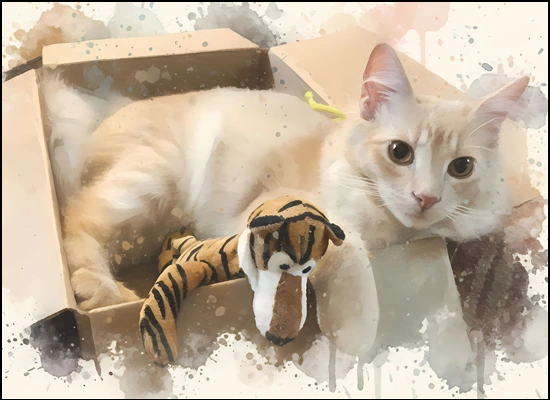
A Life in Boxes: From A to Z by Milo (a real cat)
BIO:
About Randy Parker
Parker is a writer, producer, and former software engineer who authored the illustrated humor book A Life in Boxes: From A to Z
About Milo
They call me a rescue because I did time at the SF SPCA. Technically true. I was between residences. Have you seen the housing prices in San Francisco?
Eventually I adopted four humans, who came with a trespasser named Toby. I made it work.
I have opinions about everything, and no interest in keeping them to myself. In 2018 I started writing them down. I published five blog posts. Before my attention span gave out. Read them on Emusements, if you know how to use a web browser. Or not. No fur off my back.
I now write books. Between naps.
Transcript:
Hello, feline friends, welcome to Cattitude. I'm your show host, Michelle Fern. Today, I have with me an author that has written the book.
I think we've all thought about this so much. It's called, A Life in Boxes. So that gives you a little hint.
Cats, boxes, right? Stay tuned, I can't wait to introduce you to this author. We'll be right back. Welcome back, everyone.
I'd like to welcome Randy Parker. He is the author of A Life in Boxes by Milo. Welcome, Randy.
Oh, thank you so much, Michelle. I am super excited to be here and talk about the book. I'm very excited to have you on.
So the book is by Milo, who was your cat, but of course, you wrote it. Let's talk about Milo. You described him as a very chatty cat, a notoriously chatty cat, who's always complaining and never quite satisfied, which sounds kind of like me.
But what was my, I don't complain that much, but yeah, I do my share. So what was Milo like in real life? So he actually conveyed his personality to us from the very first moment we met him. I'll give the quick backstory.
When my kids were in middle school, my daughter started pressuring us for pets and got more and more. And we finally decided we would get two kittens. So we first adopted Toby, who's actually the co-star of the book.
But the day we adopted him, we didn't find a second kitten that we liked. So we continued visiting shelters over the next few weeks. And about three weeks later, we visited the San Francisco SPCA, and they have these great cat condos.
I think other places have them now, but I think they were the pioneer. They're these big rooms that the cats are in. They're not in cages.
Anyway, we went in and we were there, because a little gray, really cute gray tabby kitten had caught my eye. And we went in to visit her. And to be honest, she was kind of boring, and she wasn't very interactive with us.
But her brother Milo, who was also in the room, he just marched right up and started mewing his head off. And he basically adopted us on the spot. That was definitely a preview of who he'd become.
And I'm happy to speak a little bit more about how he was actually in our house. I wanna know, but let me ask you this. The most vocal cats, from what I know, are generally Siamese.
Does he have any Siamese in him? You know, for the longest time, I thought he did. And I would search around, because he has a very unusual color, or at least not as common as your typical cat. He was kind of a tan or buff color.
I didn't even know that color really was common in cats. And he had a little bit of a triangular face. He didn't have blue eyes.
So I figured, you know what? Maybe there's some Siamese in here. And I searched all over. Are there any Siamese sort of variants that are, you know, that he looks like? And a few years ago, I thought I had finally found one.
And then more recently, I actually asked AI and put some photos in and everything. And they said, no, he is just a tabby cat. And, you know, you don't have to be Siamese, obviously, to be vocal.
So I always had this sort of mythology about him that he was part Siamese. But the reality is it's unlikely, since we don't know his background. Well, first I want to say, I'm so glad you went to a rescue.
And I think your first cat you said was from a shelter. Yeah, I think they're both good. My cats, I didn't even have to go anywhere.
Molly was born on my doorstep. Charlotte was her sister from a different mister and only a few months older. And Dennis was abandoned and was outside my house.
I mean, sometimes you don't even have to go far. They come and find you. That is true.
A lot of times pets find their owners. And I feel that was definitely the case with Milo, because I was being kind of fussy. I have to admit, with cats, I want one that really hits me as being particularly cute.
And I think the rest of the family was getting frustrated that, you know, what's wrong with this one or this one? And Milo was a little unusual looking. But he, as I said, he just marched up and he made it clear he was adopting us. Well, I'm glad he adopted you.
And I'm glad you went to a shelter rescue because if the cat doesn't find you, then you can find them. And then they still find you at the shelter. Funny how you attract what you're supposed to attract, if that makes sense.
Yep, definitely. So what was Milo like once you brought him home? So what he was like in the shelter was definitely a good premonition. He was loud, he was bossy, he was intense.
He was extremely present, more than any other cat I think I've interacted with. He would never shut up. He definitely expected you to read his mind and know what he wanted and to cater to his every whim.
And he would get very frustrated if you were not intuiting his wants. So you might say high maintenance. Yes, that sums it up very well.
Okay, now Milo started blogging in 2018. So how did a cat who had so much to say become a blogger? It seems like a natural to me, but how did it happen? Yeah, so I left software engineering in 2018 and had the notion when I left my career in software that I would get back to writing because I had done a bunch of creative writing before I got into my tech career. So I started a blog.
That part was easy because I had a technical background. And I started writing and posting about various topics. And I thought that one of them might be cats, that maybe I'd write something about cats.
We had adopted the two kitties two years before. But then I got this idea to write as Milo. So the blog post would be by Milo.
And that once I thought of it was very natural because he was so opinionated and it was also very easy to capture his disgruntled voice. So after I wrote the first post, he went on to write a total of five posts in six months and then his attention span ran out. Ah, okay.
Yep, but I did like to joke at the time that my cat was a better writer than I am. So let's talk about the story behind A Life in Boxes. So your original inspiration was Milo's 2018 guest post, The A to Z of Boxes.
So what was it about that post that made you think there's a whole book here? So a little bit about that post. He had, I had written several posts as Milo on my own blog. And then I got the idea because he was so obsessed with boxes.
I got the idea why he would, of course, write a blog post about boxes, about why he loved them so much. And he'd explain why from A to Z with photos of him and Toby with, of course, lots of boxes. At the time, I was subscribed to a blog called All About Cats.
And I noticed that they took guest posts. So I pitched them on the idea and they liked it and they agreed. So they published the post and that was that.
I kind of put the Milo writing aside for a while. But it was always in the back of my mind that this A to Z concept might lend itself to a children's alphabet book. So that was the seed of the idea.
It's not where it went. But earlier this year, after I'd had a very long break from working on any substantial creative projects, I kind of dusted off the idea I was looking for. You know, I really have the itch.
I wanna work on something. And I dusted off that idea and started brainstorming it. And when I did some research, what I learned was that the kids' alphabet book market is extremely competitive and can be a hard market to crack.
And that the book might be a better fit for as a cat humor book. And that actually fit the material better because I didn't write the post for kids and I would have had to kind of maybe simplify or water it down or tone down the humor a little bit. So that's the kind of long story short about how it ended up becoming a book.
Okay, thank you. So having three cats myself, I know cats have a thing with boxes. So naturally, a cat who loves boxes, that's a lot of material for you to work with.
Why do you think that cats are so obsessed with boxes? And what are Milo and Toby's favorite type of box? Okay, yeah, I'll answer those one at a time. So as far as why they're obsessed, I will be the first to admit I am not a cat behaviorist, but I do think I have some ideas and insights. I think cats are always very curious about changes in their environment.
So of course, if you bring a box in, they're gonna want to investigate it, see what it's all about. And more than that, though, they like to claim everything in their territory. So as soon as you bring a box in, they're gonna want to interact with it, claim it, make it their own.
Of course, they're fun to play in, especially if a human spends the time to interact with you and maybe throw a toy in and out. And then also, cats like enclosed spaces, I think, because it gives them a sense of security. So those are kind of my thoughts about why they like boxes so much.
Maybe there's something, I don't know, like the smell or something, but anyway, those are my ideas. As far as Milo's favorite boxes, he really liked any and all boxes. One of my favorite pages in the book is the letter S, and he is sitting in a very, very small box.
There's really nothing he could do with this box except literally just sit upright in it. But it's a box, he had to claim it, so he got in and sat in it. And then there's also a recurring theme in the book about boxed substitutes.
So like, what do you do if you're a cat and there's no box available? You make do with something that's like a box, but it's not quite a box. And he was actually so obsessed, we could put some masking tape down on the floor in the shape of a rectangle and he'd get in it. I think we had heard about other cats doing that, so we tried, and of course it worked.
Wow. And then finally, yeah, I think you asked Toby. Toby is less fussy about boxes.
He, yeah, he'll play in them, but he didn't have that same fascination. But there is this wicker cat bed that recurs in the book, and that is something that was firmly Milo's bed. But after Milo left us, Toby did claim that finally as his own and sleeps in it most nights and sometimes in the day.
Okay, we're gonna take a short break and we'll be right back. Welcome back, everyone. We're talking to Randy Parker, and he is the author of A Life in Boxes by Milo.
So we talked a little bit earlier, well, we've been talking about Milo and Toby, and they are the stars of the book. What was the relationship like between these two real-life housemates? So they were, I usually would describe them as frenemies, but that kind of overstates the, yeah. But that actually, just because it's funny.
It's always funny to say that, but it kind of overstates the animosity or implies there was more between them than there really was. They would like to chase and wrestle with each other, especially in the mornings before we get up and feed them. We'd hear them zooming all around.
In fact, when they were kittens, they were wrestling so aggressively. They weren't actually drawing blood or hurting each other, but it was so aggressive, we got concerned and asked our vet about it when they were kittens. And he kind of laughed it away and said that it was just kind of typical male kitten behavior.
You could often find them sleeping near each other, sometimes right next to each other, cuddling, or they might be side-by-side, sitting on a windowsill, looking outside. So they weren't particularly territorial about mine and yours. I would say if you, on the spectrum of, I'd say they fell somewhere on the spectrum between peaceful coexistence and pals.
So on the better end of that spectrum. Pretty good. That's pretty good, because sometimes the frenemies remain frenemies, or worse.
I have two sisters that don't get along, so. I'd never had two cats before, and I think I had read that two, or heard that two, and we were planning to get two at the same time. So I think I had read that two boy cats tend to get better, and that sometimes male, female, there can be problems, or maybe two females.
So I think that was one. I think we were deliberately trying to adopt two male cats. We were flexible, but I think that was one of the things we were thinking.
You might be onto something, because both my girls, they're sisters from different misters and different litters, so they clash. But my boy, Dennis, he's chill. He doesn't care.
He does his own thing. He's older, too. He's about eight, nine years older than they are, and he's just chill.
He's part Maine Coon, and so he's just a chill cat. All right, let's get on. Let's talk about, we talked about this a little bit in the first half.
Both Milo and Toby were rescue cats. So Milo is from the San Francisco SPCA, and Toby from the Peninsula Humane Society. Do you think their rescue backgrounds influenced how you wrote their characters? So I don't know if it consciously affected the way I wrote them, but I think indirectly it did, in the sense that I think being rescues influenced their personalities.
We don't know, since they were rescues, the shelters didn't really know. They were found on the street or whatever. Milo was found on the streets of San Francisco.
So we don't know. I think both of them were rescues where the background wasn't known, as opposed to maybe a surrender, sometimes as a family that surrenders them, and you know. So we don't know how much they were socialized.
They definitely were socialized, because they weren't feral. They are people-oriented, but neither are classic lap cats. So that's kind of that influences how I write them, because it's their background.
But on the other hand, I did want to highlight their origin as shelter rescues, and kind of make that a theme and overt in the book, because there are just too many animals awaiting adoption at shelters. And unfortunately, as far as I know, most shelters are not no-kill. There are some.
SFSPCA was at the time, and hopefully still is. So I'm always advocating adopting from shelters instead of breeders. So that was one reason I definitely wanted to make a point of highlighting that theme.
Also, a box is usually part of an adoption process, so it fit that way as well. Clever. I'm very glad that you focused on the theme of adopting from a shelter, from a rescue.
We need more adoption. There's too many cats out there that don't end up in their forever homes. And yes, they do.
They normally give you one of those cardboard boxes as, you know, here you go, here's your kitty. So very apropos. So Milo passed away in 2024.
I'm so sorry for your loss. And you didn't reveal his passing until the author bio on the very last page. Why was it important for you to keep that out of the story? So I'd say for two reasons.
One is the entire artifice and pretense of the book is that Milo is the writer and author of the book. It's the byline is, buy Milo a real cat. And he's narrating it like it's a photo album.
So we haven't really described the book. This might be a good time. The format of the book is an alphabet book for serious cat people.
So this is not a kid's alphabet book. It is a cat humor book for all ages, but, you know, adults are the core audience. And each page has a letter, you know, matching as a word, A, B, C, D, starting with one of those like you'd expect.
And then it has a watercolor image of one or both cats. And then it has Milo's kind of snarky caption underneath. So it's almost like a photo album and you're reading his captions or his narration or the photos.
And he wouldn't be able to do that from beyond the grave, or at least that would be a different type of supernatural book. So that was one reason that, you know, his death and the story of that is not really in the core of the book. The other is that since I do intend it as a humor book, the theme of death and including his death as part of the sort of main content wouldn't really fit the tone I was trying to set.
Okay, I understand. And you already told me this, but I guess your favorite letter was S. I don't know if I have a favorite letter. I do like that one a lot.
There's another one I like where the title is not quite, and Toby is in a pizza box. And then there's a caption. And one of the things that as I wrote the book and it evolved from being much more wordy in its early drafts to much less wordy and very as spare as possible in the current draft is sometimes the connection between the, you know, the word of the page, the watercolor, and the caption is not, sometimes it's very clear on the nose, but sometimes you kind of have to stop and think and figure out what the theme is and how it all interrelates.
So that's one of the pages. I also particularly like the watercolor on that page. And, you know, there's several pages I like and some are more challenging than others.
But yeah, I like the S page we talked about up top and then this not quite as well. Randy, the watercolor pictures are just beautiful. Oh, great.
I'm really happy you like them. You know, that was one of the keys of the book is the watercolors have to work and hit you, you know, for the book to work. They're the biggest thing on each page.
I think I like the S page too. That's too funny. And, you know, it's so true that cats, they do.
They always try to smush themselves into a smaller place. Well, one of the things I'm hoping from the book, you know, it is, it was kind of trying to balance a couple of things. It is specifically the story of Milo and Toby as told through photos of their life or watercolors of their life.
But at the same time, I want cat owners to recognize their own cats, right? I'm hoping that cat humor is kind of universal and they're like, oh, that's funny because they know it from one or more cats that they've owned in their own lives. Okay, absolutely. So I'm getting back to Milo.
Unfortunately, he passed on and it was from kidney disease, which is something we recently talked about on Cattitude. Did his experience with kidney disease change your perspective on feline health or maybe make you realize, you know, more the limited amount of time we do have with our cats? Yes, absolutely. So I've had four cats in my life, which is not nearly enough, but that's what it's been.
And my first cat was when I was a toddler, so I don't remember. My second cat, my childhood cat lived to 13. That's pretty good, but you do hear about cats that lived to 16, 18 or more.
I think one of my brother's cats is around 18. And so I always had wished that I had, of course, even more time with that cat. And that was all in the back of my mind when we adopted Milo and Toby.
So when Milo was diagnosed with stage two kidney disease at his eight-year-old well visit, this came as a big shock. We were absolutely not expecting anything like that at that age. And the vets told us he should probably live another one to three years with the change in diet and the right treatment.
And then one month later, he just abruptly cratered and it was just clear his time had come. So this was all like a really big trauma for the family. And obviously we weren't prepared for it.
And since then, I like relish every day that I have now with Toby. And we definitely don't take for granted the time, you know, the time we have with them. And hopefully he'll live longer than any of the others, but I'm not gonna assume anything.
It's too bad their fur babes don't live long enough. Yeah. They never do.
Even if they pass at 18 or 19 or something or 20 for a cat, that's still not long enough. Oh, I mean, you ask any pet owner, no matter how old the pet lives, it's not gonna be long enough. But I did one of the things that a recent episode you had about kidney disease.
And one of the things I learned from that is that there's not nearly as much research into cat medicine as I think dog medicine. And that a long time, companies assume people wouldn't pay a lot of monies for the healthcare for their cats. Toby just had his dental and the second year in a row, he has something where his body was absorbing his teeth.
So they had to be extracted. It's only visible on x-rays. And the vet said, nobody knows why this happens, has any idea about it.
And it just made me think of your episode again of, you know, why isn't there more known about, you know, cat health and medicine. We're getting there. It used to be.
So I've been doing Cattitude since 2017. There was an initial host that talked about the breeds, just cat breeds, which was great, but that's all he did. And when my producer said, do you wanna take it over? I said, sure, but I'm gonna do it my way.
And so we're pretty much anything and everything about cats. And part of, you know, what I've seen over almost 10, nine years is how much has progressed with cats. How much more of different products that are being developed for cats, more welfare, focus on their health.
There's just, it's more. We've come a long way in nine years. We need to go further because there's still a lot of unknown, especially compared to dogs.
There used to be, this is for dogs, this is for dogs. And what about cats? Oh, well, we're thinking about doing that because cats are just more challenging. I don't know if it's their, they're probably somewhat their makeup, you know, they're predator and prey.
Their DNA is close to 95% related to a tiger. They're domesticated, but there's still, there's a lot of unknown. And that's what I hear all the time, but I think we're getting better.
Yeah, and like when I was a kid, dental wasn't really, having dental treatment, you know, teeth cleaning and all this wasn't even really a thing, or if it was, it wasn't something mainstream or the vets were pushing. So even that's an indicator of, you know, now that's a big part of cat, probably dogs as well, of course, but for cat health is the dental health aspect as well, which can lead to all kinds of other problems if you don't treat it. Yes, absolutely.
Hey, I just had someone inquire about cats and blood pressure. And part of me thought, whoa, that's really, we're doing that now? Wow, that's great. Because before we didn't go that far.
So that will be a side note. Let's get back to you. So if Milo could review A Life in Boxes,, what do you think he would complain about? I think there's two things.
For sure, the number one thing is that it ships in a padded envelope and not a box. He would prefer you order enough copies that it needs to come in a box or maybe order it with a bunch of other household supplies so that it has to come in a box. For a cat, a box is more important than what's inside, even if it's your own book.
So that would be the main thing. The second thing would be that he would probably complain that he had to share the spotlight on a lot of the pages. A lot of pages are just Milo, but some also feature Toby or only feature Toby.
And I'm sure Milo would prefer to be the focus of every page. I think you're right. From the little I know about Milo, I think you're absolutely right.
And so finally, if Milo were sitting beside you right now, what do you think he'd have to say about the fact that his blog post back in 2018 eventually became a published book? So he was egotistical enough that I think he would just consider it inevitable. And instead of being proud and considering it an honor, his attitude would be, of course it's a book. And he'd also absolutely take it for granted that a human would do all the heavy lifting to make it a reality.
Sounds like a smart cat. And then very typical cat-like behavior. Do you have plans for another book? Possibly, depending on how encouraging the reader feedback is on this one, I have at least one more idea and maybe two of books by Milo.
The one that would be next I think would be super fun and a different format from this one. I haven't ever considered writing as Toby. He is not as intellectual as Milo and I'm not sure he'd write a book, but that could be a whole separate fun creative challenge.
And where can our listeners find your book? So it's available at Amazon. It's in paperback, but the easiest way if you wanna find it and find out about it is to actually go to my website. I'll spell this out, but it's emusements.com slash Milo.
So that's E-M-U-S-E-M-E-N-T-S.com slash Milo, M-I-L-O. And if you visit that URL, you'll get info about the book, links to the Amazon listing, and you can even sign up to be notified if he does decide to write a second book. Randy, I wanna thank you so much for coming on Cattitude and sharing all this great information about Milo and of course about your book, A Life in Boxes by Milo.
Oh, thank you so much, Michelle. This has been a super fun conversation and I really appreciate it. I hope you all enjoyed this show.
I thought it was a lot of fun. I really enjoyed talking to Randy. Please check out his book, Makes a Great Gift.
It's a fun adult humor book. It's called A Life in Boxes by Milo and it's by Randy Parker. Thanks to my guest, Randy, for coming on Cattitude.
Thank you to my cats. They love boxes. I can relate to this book so well.
Thank you, Dennis, Charlotte, and Molly. And of course, thank you to all the listeners of Cattitude. I so appreciate your loyalty.
Thank you so much. And of course, the show would not be the same without the magic of my producer and hard work. I say magic, but it's magic slash hard work.
My producer, Mark Winter. Mark, thank you for all you do. And hey, remember, lose the attitude.
Have Cattitude.
Remember, lose the attitude. Have Cattitude.