
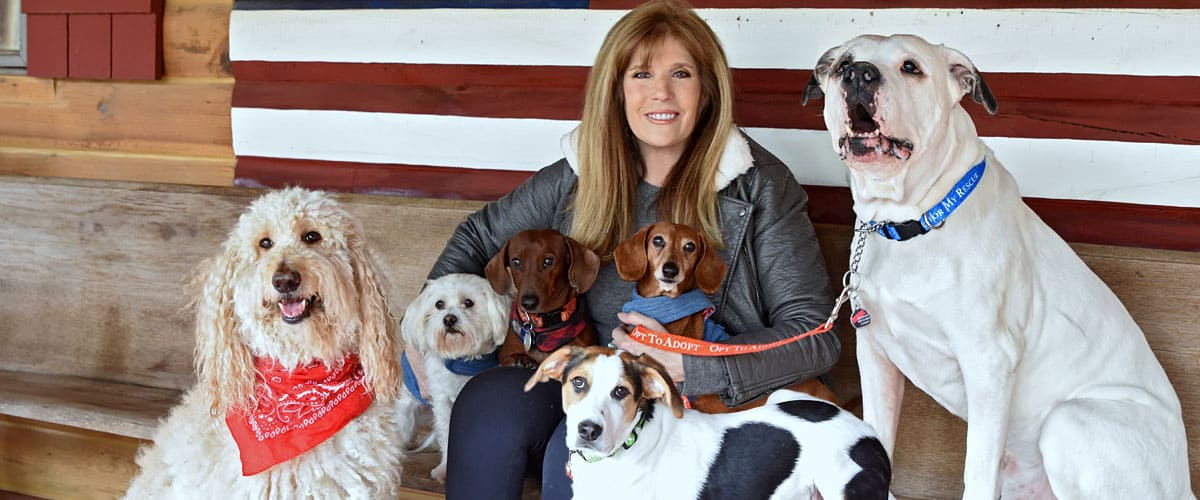
Daryl Roth Reveals the Story Behind Kinky Boots, the Tony Awards & Her Love of Rescue Dogs
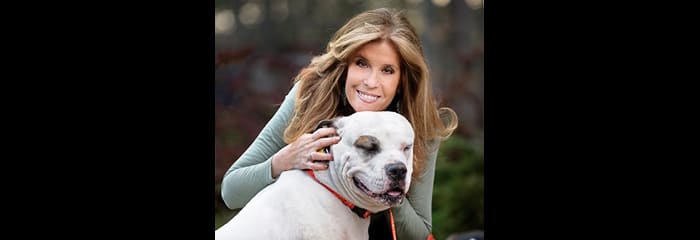


Tony Award-winning Broadway producer Daryl Roth joins Jill Rappaport for a special Tony Awards edition of Rappaport to the Rescue, sharing fascinating behind-the-scenes stories from her extraordinary career and her lifelong passion for helping rescue animals.
With more than 125 productions to her credit, including Kinky Boots, Into the Woods, Life of Pi and The Picture of Dorian Gray, Daryl reveals how she followed her instincts to turn a little-known British film called Kinky Boots into a Broadway musical. She shares the remarkable story of assembling the creative team, bringing Harvey Fierstein aboard and taking a chance on Cyndi Lauper—who had never written a Broadway musical before—and how that leap of faith ultimately became one of Broadway's biggest success stories.
Daryl also talks about her Tony-nominated play Liberation, the risks and rewards of producing Broadway theater, and why she believes following your instincts and championing meaningful stories can be just as important as commercial success.
Then the conversation turns to another of Daryl's greatest passions: animals. She opens up about the unconditional love she receives from her own rescue dogs, why she says they are essential to her mental well-being, and how she has encouraged friends and family members to adopt dogs—including senior pets. Daryl also discusses bringing rescue dogs to Broadway with legendary animal trainer Bill Berloni and why animals can have such a powerful impact both on stage and in our lives.
It's a fascinating conversation about Broadway, the Tony Awards, Kinky Boots, creative risk-taking, rescue dogs and one powerhouse producer who believes in following her heart—both in the theater and when it comes to animals.
Listen to Episode #85 Now:
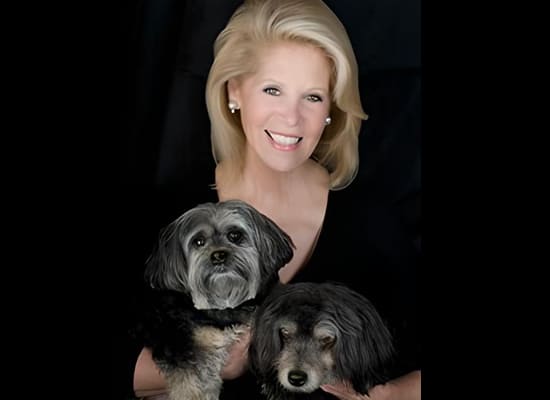
BIO:
Daryl Roth holds the singular distinction of producing seven Pulitzer Prize-winning plays: Anna in the Tropics; August: Osage County; Clybourne Park; How I Learned to Drive; Proof; Edward Albee’s Three Tall Women; and Wit. She is the proud recipient of 13 Tony Awards and London’s Olivier, her over 130 productions include: Kinky Boots; Absolute Brightness; Angels in America; Between the Lines; Blindness; Buyer & Cellar; Company; Curtains; Funny Girl; Gloria: A Life; Edward Albee’s The Goat or Who is Sylvia; Indecent; Into the Woods; It Shoulda Been You; The Kite Runner; Life of Pi; Love, Loss, and What I Wore; The Normal Heart; The Picture of Dorian Gray; The Tale of the Allergist's Wife; Twilight: Los Angeles, 1992; War Horse; and The Year of Magical Thinking. A Trustee of the John F. Kennedy Center for the Performing Arts and Lincoln Center Theater, she is honored to have been inducted into the Theatre Hall of Fame.
Transcript:
Welcome to Rappaport to the Rescue. I'm Jill Rappaport. Now with the Tony Awards just around the corner, have I got a great guest for you.
Daryl Roth is a force to be reckoned with on the Great White Way, producing over 125 productions, including award-winning The Picture of Dorian Gray, Kinky Boots, The Life of Pi, and Into the Woods, just to name a few of her mega award-winning hits. Well, of course, she is nominated again for her incredible show, Liberation. I am so thrilled to welcome this dynamo, who I'm so proud to say is also a cherished friend.
And we bonded over our deep, obsessive love of animals and our need to educate and spread the word of rescue and adoption. So Daryl Roth joining me on Rappaport to the Rescue when we come back. Welcome back to Rappaport to the Rescue.
I'm Jill Rappaport. You heard in my lead. Ladies and gentlemen, we have a force to be reckoned with, the one and only Daryl Roth.
And I am so honored that I can also call this incredible woman a friend. She is truly amazing what she has done on the Great White Way. And as you know, the Tonys are just a few days away.
And of course, Daryl is nominated again. Every year she's nominated with over 150 productions. You have 13 Tonys on your shelf.
Lucky 14? What do we think? I'm hopeful. I'm always optimistic. You know that about me.
And the play is so beautiful. It's written by Bess Wohl. It's called Liberation.
It's about a very tenacious, wonderful group of women in the 70s who really, you know, got together, talked and listened and fought for women's rights, basically all human rights, but particularly women's rights. So, you know, if the time is right, and it is, I hope that we walk home with that beautiful little statuette. Yet again, Lucky 14, right? I hope.
Well, we'll see. You know what? I don't want to count any chickens. But if you were to ask me, does it deserve it? The answer is yes.
Yes. And it's gotten multiple nominations. Yes.
Five, actually. Two of our actors, Susannah Flood, who is the leading actress, Betsy Adom, who's nominated for Featured. Wonderful Queen Jean, who is the most amazing costume designer.
And we just really, you know, Best Play is the one that we really are excited about. And Whitney White, which would be quite terrific if she should win as Best Director. It would be the first time a woman of color won for directing a play.
That would be, that would be momentous. Yeah. Wow.
Well, our fingers are crossed, although I have a pretty good feeling about this one. You are really unbelievable. What you have done, the work, your body of work in your career, and you started this whole Broadway thing late in life, right, Daryl? Yes, I was in my 40s, actually.
And it was something that I had always dreamed of doing without really any background or any preparation. You know, in that day, there wasn't a course that one could go take to be a commercial producer. And so basically, I was like the old Nike commercial.
I just did it. I just did it. You know, I thought, look, I have worked most of my life.
I ran a little business. I raised a family. I can do this.
I don't know where I got that confidence, because it was probably misguided at the time. But I think if you put your heart and soul into something and you really love what it is that you can make happen, you can do it. And if you're not afraid to, you know, fall on your toes a few times.
Take a chance. Yeah. Well, definitely that.
Risk-taking is part of this business, no matter who you are, whether you've started when you're 20 or 40 or 60. Being in the theater is a, it's a risky business. But the beauty of being able to choose what projects you want to champion is where you decide how much of a risk taker you are.
If you really believe in the story and if you really believe in the message that you want to put out in the world. And while it may not sound commercial to some, if you believe in it and you think it's important and meaningful and, you know, of course, entertaining, I don't want to forget about that part. But most of the plays that I've chosen are about significant things that I feel people should know about.
Important messages for women, for causes. Your shows, these plays, they stand for things. It's been my hope that by choosing stories by playwrights who are really passionate about the work and then if it resonates with me, I can really get behind it.
You know, people often ask me, what is the definition of a producer? Which is not an easy question to answer because a producer does so many, many things. But my simple definition is a producer is a person who facilitates other people's dreams and by doing so fulfills their own. And I've always liked that because it kind of is what I do believe in.
You know, the writing of a play is not the producers. The direction of the play is not the producers. Yes, you're involved.
The acting is not. The casting, I mean, you're involved with everything, but really you're there as the mother of the company. You are there as the champion.
You are there as the cheerleader of the work. And I like to say that the producer is the first person to show up and the last person to leave any given production because it's challenging. It's a challenging field, not taking away from the gloriousness of it and how much I love it, you know.
But it's tough. It is. It's tough.
And you've taken chances on shows where you just had that hunch, that gut feeling where you said, I'm going to go for this. Kinky Boots, for example. Yeah, that was actually such a great experience.
And I'll tell you a story after about Kinky Boots that just happened on Monday night, which you don't even know about yet, but I will tell you. But the Kinky Boots story is such a great one. I was lucky enough to be on the board of the Sundance Institute many, many years ago.
And I was out in Utah and, you know, they give you these wonderful selection of movies, some big blockbusters, and some are these little indie films and you go around and you see whatever. And I was looking at the list and the title just caught my eye, Kinky Boots. And I thought, well, if it's not a porno film, I'm going to go because I like the title.
So I asked around and people didn't know too much about it. It was new. It was a British film.
Anyway, I went to see it where it was being screened and I just felt like, I don't know, an arrow went through my heart. I said to myself, in the midst of watching it, this is a musical. This is going to be a musical.
I can't bear it. This is the best story. This is everything I care about.
And as soon as the film was over, I sat as I would to watch the credits. And I see that the film was produced by Miramax and Disney. So I run out in Utah.
And at that time, the cell service was practically non-existent. And I found a place where I could make a call to my son, Jordan, who was in New York. I said, Jordan, I just saw this little indie movie.
I don't know what's come over me, but I have to get the rights. I think it's a Broadway musical. So he said, Mom, maybe the air is too thin in Utah.
I said, no, no, I'm doing this. So he made some calls. We found out that actually it was in a particular situation where Miramax and Disney weren't quite certain as to who had the theatrical rights.
So I had to wait a bit, actually a while before they decided that they would land in Disney's lap. And Disney didn't feel that Kinky Boots was a family piece for theater. Funnily enough, as it turned out, it was a wonderful piece of theater for families and for many reasons.
But at the time, it just didn't fit what Disney was about. And I certainly get that. So I was lucky enough to get the rights.
And long story short, I called Harvey Fierstein, who I thought would really understand the story and be able to write the book. And Jerry Mitchell, who's just a wonderful director of musicals, and a colleague of mine, Hal Luftig, who was more experienced at doing big musicals, because my whole career thus far had been plays, primarily plays, and smaller musicals. But this was going to be a big undertaking.
So we put that team together, and we started asking various composer lyricists to please send us a couple of songs on spec so we could put the final piece of the puzzle together. You know, one of the most important composer lyricists. And we just didn't find anybody we were totally in love with.
And we were getting frustrated. And one day we were having our group meeting, and Harvey said, don't say no until I give you this thought. Just sit and listen.
We all said, okay, what are you thinking? He said, Cyndi Lauper. And we looked at each other, and we said, Cyndi Lauper. Well, she hasn't written a musical before, but we love her.
And she'll understand the characters in Kinky Boots. She'll know them in her soul. And girls just want to have fun.
That for sure. But we said, let's give her a try, if she's willing. And God bless Cyndi, she wrote songs on spec that we could hear.
Two of them were not so great. Two of them were fantastic. In fact, one of them stayed in the show, I'm Not My Father's Son, which made me cry at every performance for six years.
And that was the team. And we went forth, we worked on it, we had a number of workshops, we cast it beautifully. And we did an out, I'm jumping ahead to the highlights.
We did an out of town tryout in Chicago, where it got some really nice reviews, but it also got some very smart, thoughtful, critical reviews, which helped us work on it even further on our way to Broadway. And then we came and, you know, at first, it was a little hard to explain to people what, what Kinky Boots was. Some people were afraid of the title.
Everyone said, Oh, you really should change the title. And I said, No, no, we're not. No.
But as time went on, as people came in, the audience grew and grew and grew. People just loved it. And it had such, such passion about it in the audience.
And, and the cast was wonderful. The family of Kinky Boots, to this day, all the people that have played in it in the six years that it was on Broadway, and in various companies across the country and, and wherever it's been, they're all part of a big, really wonderful, caring family. So let me take you to the last Monday night, which is just timely for our conversation.
I was honored, actually, by the Entertainment Community Fund, which used to be the Actors Fund, but everybody has to get used to their new name. Yes, an incredible honor for you, Daryl, and well-deserved. It was.
It was wonderful. I was very honored. You know, many of the colleagues that I've worked with over 38 years came.
And, but the point is this, as a big surprise, as a big surprise, the finale that nobody knew about until the end, was many of our original cast members from Kinky Boots. And they say, yeah, it was so brilliant. They sang, just be who you want to be, live your life with dignity.
And they sang, you know, let us raise you up. And of course, June 1st was the beginning of Pride Month, right? And so Kinky Boots was absolutely the perfect, the perfect celebration. And Jordan did a beautiful speech and presented me with the medal.
That was nice. And it was just glorious. But the Kinky Boots story is one where I have learned so much, and I try to share with other people who are producing, that if you believe in something, trust yourself, trust your instincts.
Don't listen to the people that say, oh, that's ridiculous, or no, you can't do that. I like to say, don't listen to the demons in your head or from those outside of your head. Because negative thoughts, when you're trying to do something creative, they set up roadblocks that are just not necessary.
It's hard enough. Exactly. But I'm just fascinated by what you went through, because when Kinky Boots came to be, you were really developing your own reputation and learning your way on the Great White Way.
And yet you had so much conviction back then, Daryl. A lot of people might have said, oh, really, do you think I should change that? Oh, okay, let me think about that. And no, you did exactly what you believed.
I did. I did. You know, some people will say, oh, she's just stubborn.
But I don't look at it that way. If I thought there was reason to change the title, I would have considered it. But I didn't.
Because that was the name of the film. There was a reason that the story that was being told had that title. And for anyone who saw Kinky Boots or knows the story, it's perfect.
It's just perfect. But it also speaks volumes about Daryl Roth. You feel things and you go for it.
And you don't let others deter you from your true feelings. No. The only time I'm deterred from my true feelings are when I think I don't know how to do this properly.
You know, I don't know that I can do this piece justice to the playwright, to the creators. That's the time that it's not that I lose my confidence, but I'm very conscious of not delivering. And I don't want to disappoint.
So, if I go down the road somewhat and try to develop something and I don't feel that I'm the right one for it, I think then I am learning over the years to be wise enough to step back and say, I'm not the right person for this. I'm just, you know, and be able to say that. It's not really admitting any kind of failure or defeat.
It's just, I want the piece to have a better steward, so to speak. And between all of the plays and the musicals, I mean, Dorian Gray, Into the Woods, I mean, hit after hit, you obviously have what it takes to know what works. Well, it's interesting because when we say what works in theater, what works for audiences, what works for editorial coverage, what works for the family that's making this, the creators and the people in the cast, what works? And then there is what works commercially.
What are people going to actually pay to come and see? Enough so that you can recoup your capitalization. That's the first level of success. And that's the other added pressure for a producer.
Well, it is. It really is. And not only do you want to hope to recoup, you hope to actually turn a profit so that the people that invested and believed in you and believed in this project, you know, it's not philanthropy, although I like to say that theater does deal in a different currency.
And that currency, a lesson I have learned well, but as long as you feel the success of the piece, and I don't mean to sound irresponsible financially, but some things really don't recoup. They just never meet their financial, you know, reward. But that doesn't mean that they weren't successful.
It doesn't mean that for one minute, because there's so many other ways to deliver a successful piece of theater. Of course, we like it when it works financially. I don't mean to say that.
Makes things a little easier and happier, especially going up to the investors, for sure. Yeah. But you know, Daryl, the one of the things that I've always loved about you, creativity, brilliance, all of the things you've done, we bonded over our love of animals.
Obviously, the show is Rappaport to the Rescue. Our common denominator is that our animals are our family, our children. I know you love those dogs as much as you love Jordan and your grandson.
So that really has been- True. And my daughter. And your daughter, of course.
And your husband, who I just adore. He's great. There is a hierarchy of love.
We won't get into it. But I was just at your home, and we had such a great lunch, and I was watching you interact with your two beautiful dogs. And they really add so much to your life and to your creativity.
They add so much to my life. I think anyone that has a pet, a dog, particularly in my case, you just feel that bond. And you feel that no matter what's going on in your life, there's always this love that's going to come at you and that you can respond to it, receive and give.
I mean, just after a day of whatever, it could be a great day, it could be a horrible day, I come home to my dogs, and the world is wonderful. And that's all it is. And it's such a simple thing.
They depend on me, and truly, I depend on them for my mental well-being. And of course, they were rescues. And I know when possible, when you have the projects, you love working with animals on stage.
There's nothing better for you. Yeah. If it works out, the play Left on Tenth, written by Delia Ephron, was a particular story, a true story about her life.
And, and the dog played such an important part that we were very happy to work with Bill Berloni, who you know, and we found these wonderful rescues as he does. And, you know, as soon as the dog comes on stage, the audience goes, Oh, you know, you've got them, you've got them in the palm of your hand. And I love it.
I mean, there aren't many shows that call for a dog, but when it's really integral to the story, you know, and often I'm drawn to stories because they're animals in it. That's not on my priority list. But when it's right, it's just lovely.
But in my own family, I've always encouraged my all my family to have dogs. My daughter has two dogs. I convinced Jordan and Richie, when their son Levi was a bit older, to adopt a dog and, and Richie's mother, who's, you know, a senior citizen, we found her a senior dog.
I think dogs make your life so much better. And I know how much you care about senior dogs and, and giving them a wonderful kind of, you know, end of life chapter. And I say that for people to I try to talk a lot of senior friends of mine into getting a dog even though, you know, they think they're not going to be around for 10 years or 20.
I say it doesn't matter the length of time, it matters the quality of time and how your life will be so enhanced, and how you will enhance the dog's life. And you've made an influence on some of your friends, you've really made an impact. Actually, some have adopted because of you.
Many have. In fact, Jordan, Jordan said on Monday in his speech, that often my mother will talk you into adopting a dog rescuing a dog that you didn't even want. Or better still that you didn't know you wanted.
Those are my most successful rescues. Well, that's also what I love about you. Because considering your life and your career and how crazy and busy things are, you always take time to smell the roses to know what's important to nourish your passions to take care of these animals to educate people on the importance of rescue and adoption.
You've made your world a world of many, and you never forget how lucky you are and sharing that with everybody. Thank you for saying that. I try to keep gratitude at the front of my mind every morning, every day.
I mean, I am a lucky lady. And I know that. And I don't take any of it for granted.
And all I really care about is that my family, and that includes my dogs, my extended family, my theater families, anybody in my orbit, I just want the best for them. And if I can help in any way make that happen, you know, that's my pleasure. That's my pleasure.
I mean, because I am a fortunate person. And I don't take it for granted. And none of us should, none of us should really we're lucky to be on this planet.
And we have a lot to do. We're not getting into politics, but there is a lot to do. Yeah, that's a whole other can of worms, right? Let's leave that for another time.
Yeah, well, I feel so fortunate to be in your orbit and to have you in my life. I know that our friendship it means so much to me when I spend time with you. I come home on a high, Daryl, you're just amazing.
And I want to know with Sunday night coming up just a couple days away here, what are you going to wear? And is Jordan helping you with your wardrobe? Well, Jordan is the fashion icon of the family in the world. He's the star of the Met Ball every year. He truly is.
He has such creative and marvelous taste. And he is just, I don't know, he's just such a creative force for fashion, for theater, for art, for so many things. So, we never know what Jordan's wearing until he walks in.
So, I have no idea. It's always the reveal. And you know you're going to be a little upstaged by your son, but that's okay.
I hope so. I certainly hope so. I myself have very conservative taste in clothing.
And as far, I don't, you know, it's so weird. I was looking for something new to buy because, you know, it's kind of like it's exciting to buy something new. And I did look around.
And then I thought, you know, I have such pretty things in my closet that I'm going back to something. I won't call it vintage because that long ago, I don't think I can fit into those things. But I did have some pretty things and I'm just wearing a beautiful, creamy thing that I like and I'll be comfortable in.
That's the other thing, you sit there for like three hours plus. And so, you need to be comfortable. You need to be comfortable and you have to wear the right shoes when you walk up on that stage.
I remember one year I took my shoes off and I ran up without my shoes on because they were so uncomfortable. And then I got on stage and I put my shoes on and everybody was looking at me like, what is she, a hillbilly? I love that. I had that happen to me.
I said, these shoes are killing me. And I took them off on stage. Yeah, I would never have gotten there in time if I had tried to walk in them.
Oh, are you a superstitious person? Do you have a speech prepared or are you just going to wing it? In this particular case, this year for Liberation, we decided that we would give Bess Wohl, the playwright, the honor of accepting, should we win. And I feel good about that. In past years, if I'm the lead producer, I will give the speech, as I've done many times.
But I don't know, this felt right. It felt right. I have to tell you, I know you're supposed to say break a leg.
So, break a leg. God forbid. Yeah, God forbid.
I know. I always wondered about that. Everybody says say break a leg, but heaven forbid, right? But meanwhile, I feel so good about this year and I feel so good about the opportunity that you're going to walk up on that stage, Daryl, and this is your year yet again.
Well, I love that you're so positive. You're always such a joyous person to be with. You said you like to be with me.
I like to be with you because you're always so upbeat. You always look at the bright side of life. And I just think more people should take that page out of your book, my friend, because too much is going on that's not worth smiling about.
So, we've got to find those things that are. And you do. And you do.
And that's why I want to hang out with you. Hang out with upbeat people and you feel up. Right, Daryl? It's a deal.
And animal lovers only. We are so thrilled to have you on this show, not only because of your incredible talent, but your deep love and commitment to animals in need. Well, thank you for all you're doing for our four-legged friends and of any age, especially the seniors, which I just so love about you.
So, thank you for inviting me on the show. I love you. And thank you all for tuning in to this very special edition, a Tony edition of Rappaport to the Rescue.
"Rappaport to the Rescue" Theme Song Written & Produced by Mark Winter
© Copyright 2022 Such Fun Music (ASCAP)